
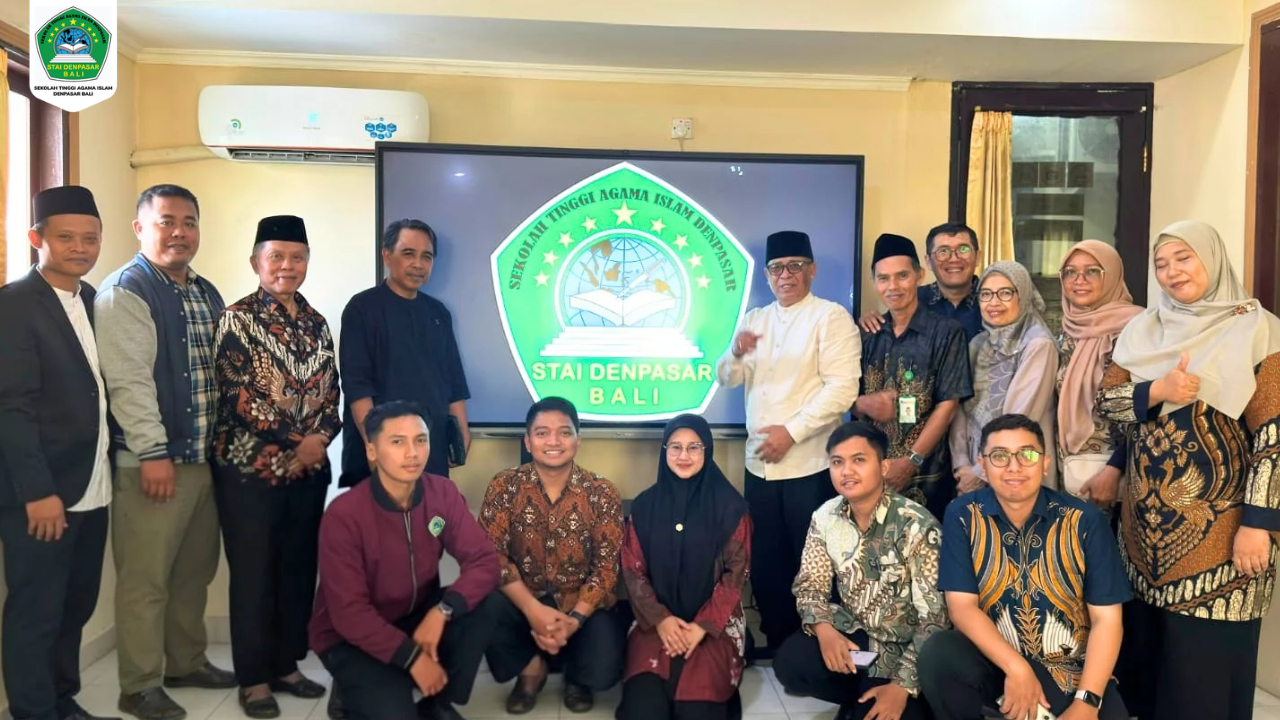
DENPASAR, Bali – STAI Denpasar Bali welcomed Prof. Dr. H. Muhammad Sa’i, M.A., Secretary of the Regional Coordination Office for Islamic Higher Education (Kopertais Region XIV), during an official visit to the institution’s Meeting Room in Denpasar, Bali. The meeting brought together representatives of the institution’s leadership, academic community, and administrative personnel to discuss developments in higher education policy, lecturer performance management, and the institution’s ongoing transformation toward becoming an institute.
The visit served as an opportunity to strengthen communication and institutional relations between Kopertais Region XIV and STAI Denpasar Bali. Beyond its role as a gathering for silaturahmi, the meeting provided a platform for exchanging information, discussing administrative developments, and improving institutional understanding of current and anticipated higher education policies.
The STAI Denpasar Bali representatives attending the meeting included Dr. Jumari, S.P., M.Pd.; Dr. H. Arjiman, M.Pd.; Dr. Sudarsono, S.Kom.I., M.Pd.I.; Dr. Novena Ade Fredyarini Soedjiwo, S.S., M.Hum.; Hj. Kusjuniati, S.E., M.M.; Nur Wahyudi, S.Pd.I., M.H.I.; Mukhtar Saifuddin, S.Ag., M.Ag.; Raden Agrosamdhyo, S.E., M.M.; Mohammad Hisyam, M.Pd.I.; Kurniawati, S.E., M.M.; Pasai Syahri Dewa; Butet Silvia Devi Nasution; Bagas Son Husin; Gifari Iman Nugroho; and Ilham Maulana.
Understanding Developments in Lecturer Workload Policies
One of the principal topics discussed was the development of policies concerning Lecturer Workload (Beban Kerja Dosen/BKD). The discussion covered information about assessment instruments, lecturer performance evaluation mechanisms, supporting administrative documentation, and the assessment of lecturer credit-point application documents, commonly known as Daftar Usulan Penetapan Angka Kredit (DUPAK).
Understanding developments in BKD assessment is important for lecturers and higher education institutions in maintaining appropriate performance records and administrative accountability. As part of academic governance, accurate documentation and a clear understanding of applicable assessment procedures help institutions manage lecturer performance information systematically.
The discussion of BKD instruments and DUPAK evaluation also highlighted the importance of regulatory awareness among academic personnel. Lecturers and institutional administrators need to remain informed about applicable procedures so that performance documentation and related administrative processes can be managed appropriately.
Anticipating the Development of SISTER-Based BKD Reporting
Another significant subject was the planned transition of BKD management and reporting procedures to the Integrated Human Resources Information System (Sistem Informasi Sumberdaya Terintegrasi/SISTER).
The information shared during the meeting highlighted the anticipated role of SISTER in supporting the administration of higher education human resources, particularly in relation to lecturer performance reporting and documentation. The development reflects the growing relevance of integrated digital information systems in higher education administration.
For STAI Denpasar Bali, this anticipated transition underscores the importance of institutional readiness, particularly in data management, administrative coordination, and technical understanding. Institutional leadership, lecturers, academic administrators, and information technology personnel will need to maintain effective communication to support any adjustments to reporting procedures.
The discussion also emphasized the importance of understanding the applicable technical procedures and policies before implementation. The transition was presented as a planned development, rather than a completed change in the BKD reporting system.
Institutional Transformation Toward Becoming an Institute
The meeting also addressed the ongoing institutional transformation of STAI Denpasar Bali toward becoming an institute. This discussion formed an important part of the institution’s broader development agenda and its aspiration to strengthen its position within the Islamic higher education landscape.
Institutional transformation represents an opportunity to enhance organizational capacity, improve academic governance, strengthen institutional structures, and support the development of educational quality. It also requires careful preparation, coordination, and an understanding of the applicable regulatory framework.
For STAI Denpasar Bali, the aspiration to become an institute reflects a broader vision of building a stronger, more adaptive, and sustainable Islamic higher education institution in Bali. The discussion provided an opportunity to exchange information concerning institutional development and the importance of coordination with relevant higher education stakeholders throughout the transformation process.
The transformation remains an ongoing institutional process and should be understood within the framework of the necessary preparations and applicable formal requirements.
Strengthening Collaboration for the Future of Islamic Higher Education
The visit of the Secretary of Kopertais Region XIV highlighted the importance of continuous institutional communication in responding to developments in higher education policy. Discussions concerning BKD, SISTER, and institutional transformation demonstrated the close relationship between regulatory awareness, human resource management, digital administration, and organizational development.
The participation of representatives from different areas of STAI Denpasar Bali also reflected the importance of collective involvement in strengthening academic governance. Institutional development requires coordination not only at the leadership level but also through the active participation of lecturers, academic personnel, and administrative staff.
Through this institutional engagement, STAI Denpasar Bali continues to recognize the importance of maintaining constructive coordination with Kopertais Region XIV while preparing to respond to evolving higher education policies and administrative developments.
Moving forward, a stronger institutional foundation will depend on competent human resources, accountable academic administration, reliable information systems, and sustained collaboration among relevant stakeholders. These elements are essential to supporting STAI Denpasar Bali’s ongoing development and its aspiration to become an institute, while contributing to the advancement of quality Islamic higher education in Bali.