
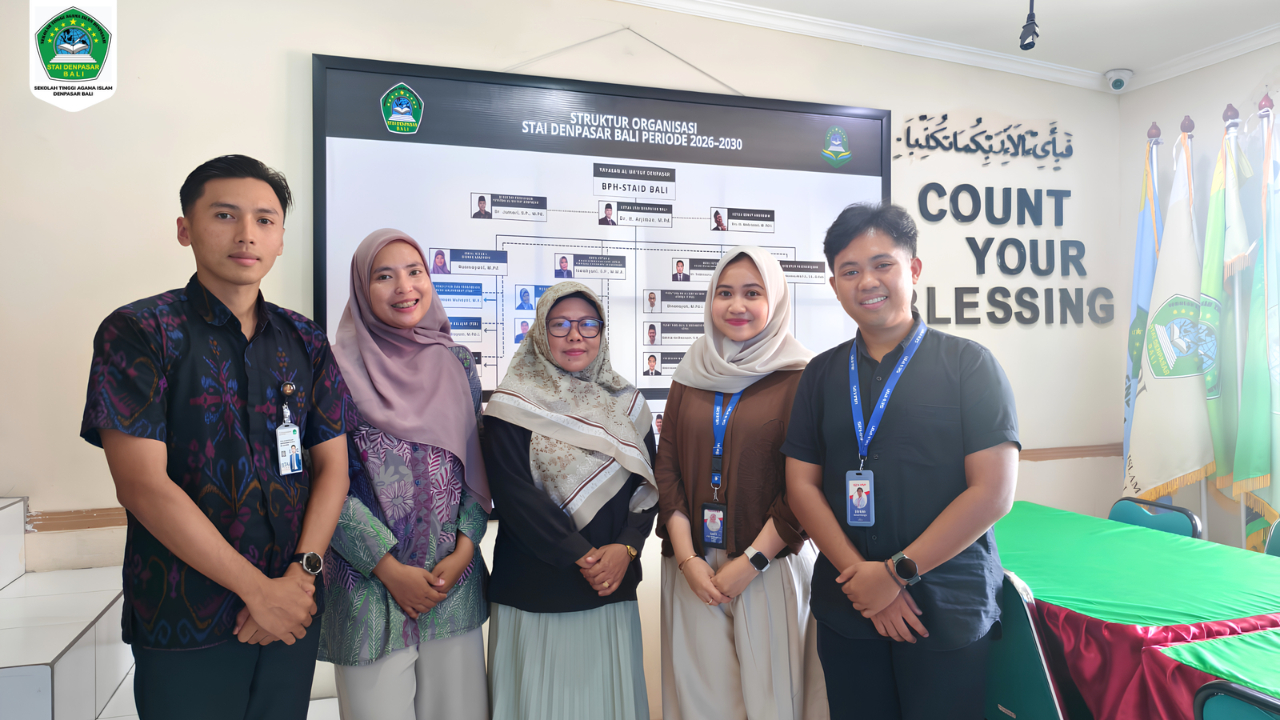
DENPASAR, Bali — Sekolah Tinggi Agama Islam (STAI) Denpasar Bali welcomed representatives of PT Sentra Vidya Utama (SEVIMA) for a customer experience and stakeholder engagement visit at the institution’s meeting room on Thursday, October 29, 2026. The meeting focused on strengthening communication between the institution and its technology service provider, reviewing experiences with SEVIMA Platform, discussing operational challenges, and exploring potential opportunities for future cooperation.
Representing SEVIMA were Santi Fajriani and Rayhan Haeqal Rahman, both Customer Experience Specialists. STAI Denpasar Bali was represented by Iswahyuni, S.P., M.M.A., Deputy Chairperson II for Resources and Infrastructure, who attended on behalf of Chairperson Dr. H. Arjiman, M.Pd., who was unable to attend. Also participating were Butet Silvia Devi Nasution, Head of the Academic Affairs Division, and Pasai Syahri Dewa, Higher Education Information Technology and Data Operations Staff responsible for institutional information systems and higher education data administration.
The visit provided a forum for discussing the institution’s experience using SEVIMA Platform, sharing practical perspectives on academic and technical operations, and considering how continued communication could help align digital services with institutional requirements.
Reflecting on Nearly Two Years of SEVIMA Platform Usage
STAI Denpasar Bali expressed appreciation for its experience using SEVIMA Platform over nearly two years as part of its digital academic administration environment. The experience provided a basis for reflecting on the institution’s operational needs, communicating practical concerns, and discussing areas that might require further clarification or support.
Digital platforms play an increasingly important role in supporting academic administration and institutional information management in higher education. Their use requires coordination between academic administrators, institutional leadership, information technology personnel, lecturers, and other stakeholders involved in delivering academic services.
For this reason, direct communication between a higher education institution and its technology provider can help establish a clearer understanding of user experiences, service expectations, and institutional priorities. The customer experience visit created an opportunity for such an exchange without presuming that all operational challenges had been resolved or that specific service improvements had already been achieved.
Discussing Academic Administration and Technical Challenges
Academic administration was among the important areas addressed during the meeting. As the unit responsible for academic affairs, the Academic Affairs Division plays a central role in supporting institutional procedures and coordinating services related to academic activities.
The exchange of experiences highlighted the relevance of understanding the practical requirements of academic administration and the importance of digital support in managing institutional processes. Reliable information systems, effective coordination, and accessible operational guidance are important considerations in maintaining consistent academic services.
Technical operations and higher education data administration also formed part of the discussion. These responsibilities involve maintaining accurate institutional information, managing academic data, and understanding applicable regulatory and reporting requirements.
The participation of the institution’s information technology and data operations staff provided an operational perspective relevant to these matters. Coordination between academic administrators, information system operators, and technology providers can help clarify technical requirements and support a shared understanding of institutional needs.
The meeting addressed these areas as practical concerns in higher education management, without attributing specific system failures, regulatory violations, or technical resolutions to the participants.
Exploring Service Packages and Additional Services
The discussion also included information about SEVIMA’s available service packages and additional services. STAI Denpasar Bali currently uses the Starter package, while the package options introduced during the meeting included Growth, Professional, and Business.
The exchange offered an opportunity to understand the available service options in relation to the institution’s current circumstances and potential future requirements. Considering such options can form part of an institution’s broader assessment of its digital service needs, operational priorities, and resource considerations.
However, the discussion did not establish a decision by STAI Denpasar Bali to upgrade its subscription, purchase additional services, or approve new expenditure. Any future consideration of these options would need to be distinguished from the information-sharing and stakeholder engagement that took place during the visit.
Discussing Broader Opportunities for Collaboration
Beyond platform usage and operational concerns, the meeting covered broader topics relevant to higher education management. These included lecturer workload management and performance-related administration, internal quality assurance, financial management and related administrative processes, and Recognition of Prior Learning (RPL), known in Indonesia as Rekognisi Pembelajaran Lampau.
These areas reflect the range of administrative and quality management responsibilities that institutions must coordinate in their daily operations. Discussing them provided an opportunity to consider institutional requirements from a broader perspective, extending beyond the immediate use of an academic information system.
The meeting also explored the importance of maintaining more intensive communication and identifying potential areas for future collaboration between STAI Denpasar Bali and PT Sentra Vidya Utama. Continued engagement can provide both parties with opportunities to clarify service requirements, exchange relevant information, and develop a better understanding of evolving institutional needs.
No finalized cooperation agreement, platform upgrade, or specific implementation plan was established by the information provided about the meeting.
Building Stronger Communication for Digital Academic Services
The customer experience visit underscored the value of constructive dialogue between higher education institutions and technology service providers. By sharing operational experiences and discussing academic, technical, and administrative requirements, both parties gained an opportunity to strengthen mutual understanding and explore areas of common interest.
For STAI Denpasar Bali, maintaining communication with its technology provider is relevant to the ongoing management of academic administration and digital institutional processes. Reliable information, clear service expectations, and coordination across institutional functions remain important considerations in supporting effective operations.
Moving forward, sustained stakeholder engagement can provide a foundation for identifying institutional priorities, considering appropriate service options, and exploring potential collaboration. Through open communication and a shared commitment to understanding operational needs, STAI Denpasar Bali and PT Sentra Vidya Utama can continue their dialogue on supporting the development of digital academic services in higher education.