
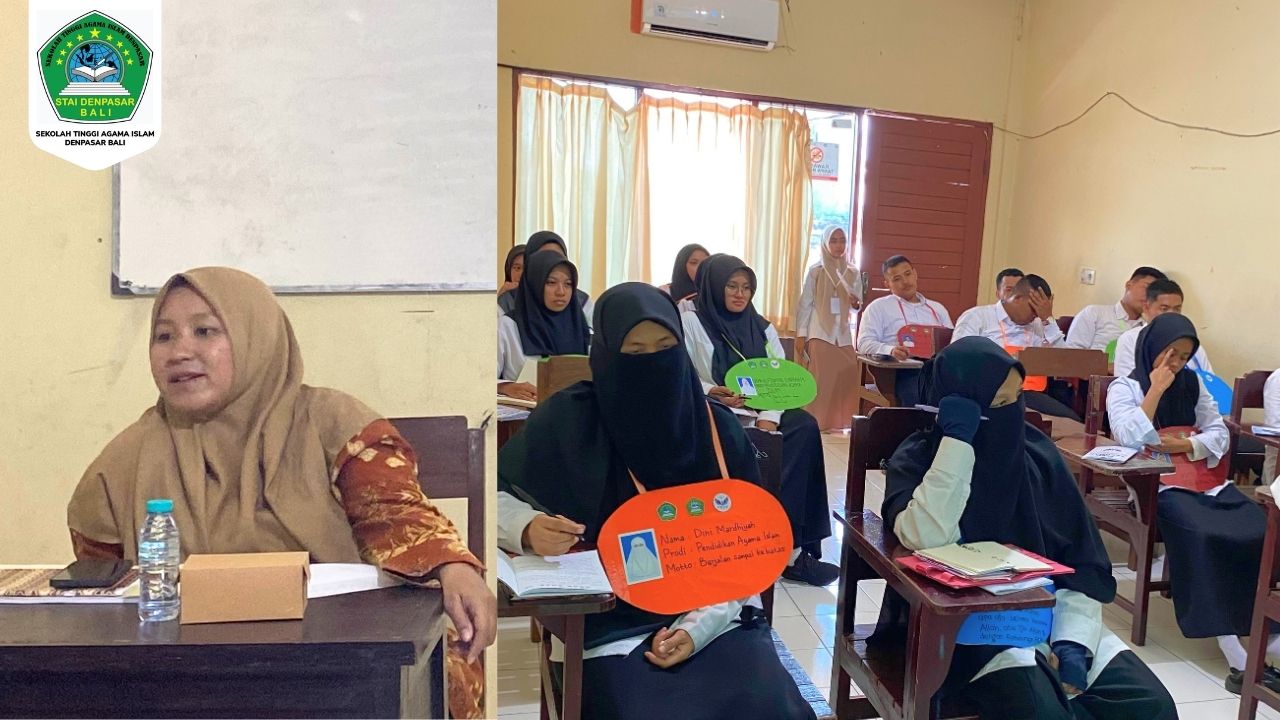
STAI Denpasar Bali – As part of the 2026 New Student Academic and Cultural Orientation Program (Pengenalan Budaya Akademik/PBAK), STAI Denpasar Bali organized an academic orientation session introducing new students to the Bachelor’s Program in Islamic Education Management, locally known as Manajemen Pendidikan Islam (MPI).
The session was delivered by Adisti Nur Inayah Nisa, S.S., M.Hum., a Permanent Lecturer at STAI Denpasar Bali. Through the session, new students were introduced to the academic identity, educational direction, learning process, professional competencies, and potential development opportunities associated with the Islamic Education Management Study Program.
The introduction served as an important starting point for students as they begin their undergraduate journey. Beyond providing an overview of the study program, the session encouraged students to understand that Islamic Education Management involves the integration of management knowledge, educational administration, institutional governance, leadership, and Islamic values.
Understanding the Academic Direction of Islamic Education Management
During the session, students gained an initial understanding of the academic focus of the MPI Study Program and its relevance to the development and management of educational institutions.
Islamic Education Management is closely connected with the processes of planning, organizing, leading, evaluating, and developing educational institutions. Students are therefore expected to gradually develop an understanding of how effective management can support the quality, sustainability, and development of educational organizations.
The discussion also introduced students to a range of potential professional directions related to educational management and administration. These may include careers in educational administration, institutional planning and evaluation, the management of Islamic educational institutions, pesantren and madrasah administration, educational leadership, and other relevant professional fields.
Such career pathways were presented as potential directions that students may pursue based on their individual competencies, qualifications, experiences, available opportunities, and applicable professional requirements.
Exploring the Curriculum and Academic System
The orientation also provided an overview of the academic structure and major areas of learning within the MPI Study Program.
Students were introduced to fields of study related to Islamic educational leadership, human resource management in education, curriculum management, educational financing, educational planning, and educational management information systems.
These areas are intended to help students understand the complex nature of educational institutions and the importance of effective planning, administration, leadership, decision-making, and organizational development.
Another important part of the session focused on the academic system that students will encounter throughout their studies. New students received an introduction to the Semester Credit System (SKS) and the Study Plan Card (Kartu Rencana Studi/KRS), both of which form part of the academic planning process.
Students were also encouraged to understand the importance of responsible study planning and academic consultation. Guidance from Academic Advisors, known as Dosen Pembimbing Akademik (DPA), can support students in navigating their academic responsibilities and planning their educational progress.
Developing Administrative and Managerial Competencies
The session emphasized that students in the Islamic Education Management Study Program are expected to develop both technical and interpersonal competencies.
Administrative knowledge may include an understanding of official correspondence, document management, archiving, office applications, and educational data administration. These competencies are relevant to the operational needs of modern educational institutions.
At the same time, managerial development involves the cultivation of important skills such as problem-solving, decision-making, organizational communication, teamwork, leadership, planning, and evaluation.
The combination of administrative competence and managerial capability is essential in preparing students to understand and respond to the evolving challenges faced by educational institutions.
Through their academic journey, students are encouraged not only to acquire theoretical knowledge but also to develop the ability to apply their understanding responsibly and professionally within organizational environments.
Practical Learning and Professional Experience
Practical learning and professional exposure were also highlighted as important elements of student development.
Students were introduced to the potential value of internships, field practice, administrative observation, and other forms of practical engagement in accordance with the applicable curriculum and academic regulations.
Such experiences can provide opportunities for students to observe and understand administrative processes, institutional management, educational planning, data management, and organizational practices within relevant professional environments.
Educational institutions such as schools, madrasahs, Islamic educational institutions, administrative offices, and other relevant organizations may provide meaningful contexts for practical learning, subject to institutional procedures, academic requirements, cooperation, and available opportunities.
The session therefore encouraged students to view practical experience as an important complement to classroom learning and as part of their broader preparation for future professional responsibilities.
Learning in Bali’s Multicultural Environment
The orientation also highlighted the importance of understanding Islamic Education Management within the multicultural context of Bali.
As students pursue their academic development at STAI Denpasar Bali, they are part of a broader social environment characterized by cultural and religious diversity. This context requires not only academic and managerial competence but also social awareness, professionalism, tolerance, and constructive communication.
Students were encouraged to understand the importance of building respectful relationships with educational stakeholders, community leaders, government institutions, and diverse social groups.
Effective educational management requires the ability to work collaboratively while maintaining institutional values and contributing positively to the wider community.
The development of Islamic educational institutions in a diverse environment can therefore be supported through professionalism, inclusivity, mutual respect, and constructive engagement with surrounding communities.
Student Organizations and Leadership Development
Another aspect of the introduction concerned opportunities for student participation and organizational development.
The Islamic Education Management Student Association, or Himpunan Mahasiswa Program Studi (HMPS) MPI, represents an important platform through which students may develop leadership, collaboration, communication, and organizational skills.
Academic discussions, educational seminars, administrative workshops, leadership activities, and other student-led initiatives can provide additional opportunities for students to develop their abilities beyond the classroom.
Participation in student organizations can also help students gain practical experience in planning activities, working in teams, managing responsibilities, communicating with others, and developing professional networks.
The orientation encouraged students to view organizational involvement as a constructive complement to their academic development and as an opportunity to strengthen important interpersonal and leadership competencies.
Preparing for Academic and Professional Responsibilities
The session also provided an early introduction to the importance of preparing for future academic requirements, including undergraduate research and thesis completion.
Potential areas of research within Islamic Education Management may relate to institutional management, educational leadership, curriculum development, educational policy, human resource management, administrative effectiveness, educational quality, and organizational performance.
Students were reminded that the specific procedures and requirements for thesis preparation must follow the applicable academic regulations and research guidelines of STAI Denpasar Bali.
In addition, the introduction emphasized the importance of understanding the academic structure of the study program and the roles of academic personnel who support students throughout their studies.
Knowing how and when to communicate with lecturers, academic advisors, and study program administrators is part of developing responsible academic behavior.
Building Professional Ethics and Academic Culture
Professional ethics and academic culture formed another important dimension of the orientation.
Students were encouraged to develop discipline, responsibility, integrity, professionalism, and effective communication from the beginning of their university experience.
These values are particularly relevant for students preparing for future responsibilities in educational administration, management, and leadership.
Respectful communication with lecturers, educational staff, fellow students, and other stakeholders represents an important part of professional development.
The session also highlighted the value of service-oriented attitudes, responsible communication, and a willingness to contribute positively to academic and institutional environments.
By developing these habits early, students can build a stronger foundation for their future roles as educational administrators, managers, and leaders.
Encouraging Broader Learning and Student Achievement
New students were also encouraged to remain open to opportunities for broader academic and professional development.
Depending on applicable policies, institutional provisions, and program availability, students may have opportunities to participate in cross-disciplinary learning, student exchanges, educational activities, independent projects, collaborative research, scientific competitions, and other recognized academic initiatives.
Such experiences can contribute to the development of broader perspectives, practical competencies, academic achievements, and professional networks.
The session also emphasized the importance of student contributions to the overall academic environment. Academic achievement, organizational participation, research involvement, competition participation, and other constructive activities can contribute to a positive culture of continuous improvement within a study program.
Students were further encouraged to explore legitimate scholarship opportunities and research-related activities for which they may be eligible, while remaining attentive to official requirements, procedures, and available programs.
Beginning an Academic Journey in Islamic Education Management
The introduction to the Bachelor’s Program in Islamic Education Management provided new students with an important foundation for understanding the academic journey ahead.
Through the session delivered by Adisti Nur Inayah Nisa, S.S., M.Hum., participants gained an initial overview of the study program’s academic direction, learning processes, professional competencies, practical development opportunities, organizational involvement, ethical responsibilities, and potential future pathways.
As they begin their studies at STAI Denpasar Bali, the new MPI students are expected to actively develop their academic competence, managerial skills, leadership capacity, professional ethics, technological awareness, and commitment to continuous learning.
The 2026 PBAK program therefore serves not only as an introduction to campus life but also as an important starting point for students to understand their roles and responsibilities within their chosen academic field.
Through active participation in academic activities, practical learning, organizational development, research, and other constructive opportunities, students are expected to continue preparing themselves to contribute responsibly to educational institutions and society while upholding the values of professionalism, integrity, collaboration, and Islamic education.