
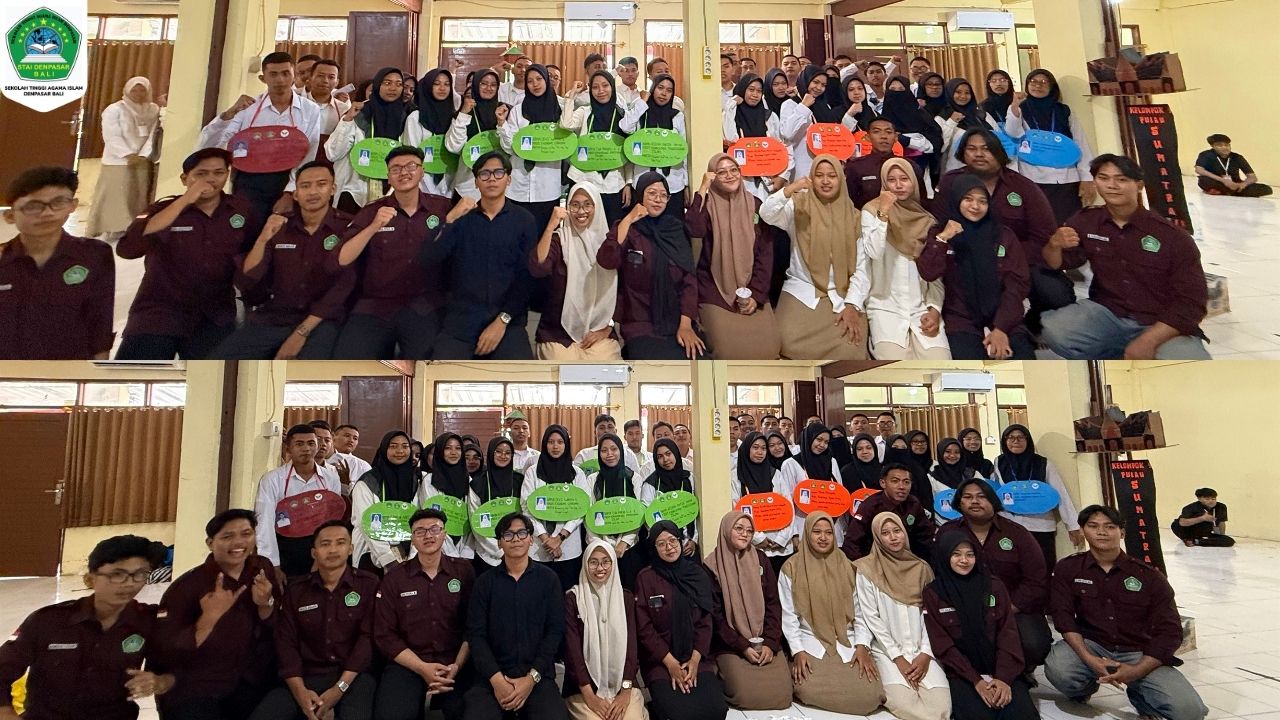
STAI Denpasar Bali – Introduced new students to the role and significance of the Student Executive Council, known as Dewan Eksekutif Mahasiswa (DEMA), within campus life. The session provided an initial understanding of student leadership, organizational development, program implementation, collaboration, and opportunities for active participation throughout the students’ academic journey. The organizational structure of DEMA is as follows:
1. Nadia Risky Amelia Safitri – President
2. Nurin Nadia Izzatul Lillah – Vice President
3. Muhammad Naufal Roofi – Secretary General
4. Widya Lestari – Minister of Finance
5. Muh Bintang Faisal Putra – Coordinator, Ministry of Home Affairs
6. Bayu Pratama – Ministry of Home Affairs
7. A. Ziadatul Qiram – Ministry of Home Affairs
8. M. Farhan Hamid – Ministry of Home Affairs
9. Dava Rusna Wicaksana – Coordinator, Ministry of Education and Culture
10. Hamdani Azhari – Ministry of Education and Culture
11. Rizal Farhan Firdausy – Ministry of Religious Affairs
12. Siti Nur Latifa – Ministry of Religious Affairs
13. Andi Rizki Mubarok – Coordinator, Ministry of Youth and Sports
14. Muhammad Bagas Putra – Ministry of Youth and Sports
15. Muhammad Davin Ega Rafif – Ministry of Youth and Sports
16. Ajeng Fatya Rachmasari – Coordinator, Ministry of Communication and Informatics
17. Feby Aulia Putri – Ministry of Communication and Informatics
18. Aliya Umi Amarta – Ministry of Communication and Informatics
The introduction to DEMA formed part of the broader orientation process designed to help new students become familiar not only with the academic environment of higher education but also with the organizational spaces that support their personal, social, and leadership development. Through the session, students gained an overview of how participation in student organizations can complement classroom learning by providing practical experiences in communication, coordination, teamwork, decision-making, and responsible leadership.
In general, DEMA may be understood as an executive-oriented student organization that is involved in initiating, coordinating, and implementing student programs and activities in accordance with applicable institutional regulations and organizational provisions. The orientation emphasized that an executive student organization can serve as a platform through which ideas, initiatives, and student aspirations are developed into constructive programs that contribute to student development and campus life.
The discussion also highlighted the importance of organizational management. Student activities require planning, coordination, communication, implementation, and evaluation, all of which provide valuable practical learning experiences. Through organizational involvement, students may encounter opportunities to develop leadership awareness and managerial skills while learning how to work collectively toward shared objectives.
New students were also introduced to the importance of organizational identity and direction. Within an executive student organization, a shared understanding of values, priorities, responsibilities, and organizational goals can help strengthen cooperation among student leaders and members. Where an administration formally establishes its own vision, mission, or organizational identity, these elements may serve as a reference for developing programs and maintaining a common sense of purpose. The session therefore encouraged students to understand that leadership is closely connected with responsibility, commitment, communication, and the ability to work collaboratively.
Another important aspect of the introduction concerned the division of responsibilities within student organizations. Depending on the organizational structure and regulations in force, executive student organizations may consist of ministries, departments, divisions, or other working units responsible for particular areas of activity. These areas may include internal coordination, external relations, student resource development, communication and media, social initiatives, religious activities, community engagement, and other programs relevant to student development.
The division of responsibilities was presented as an important element of organizational coordination. Clear roles can support more effective communication, prevent unnecessary overlap, and help members understand their respective responsibilities. At the same time, successful organizational work depends on cooperation across different units, as student programs often require the participation and coordination of multiple individuals and organizational components.
The orientation also provided a general understanding of the relationship between DEMA and other student organizations. Within the broader student organizational environment, DEMA, the Student Senate (SEMA), Study Program Student Associations (HMPS), Student Activity Units (UKM), and other relevant student bodies may each contribute to student development through different functions and areas of activity.
In general terms, SEMA may be associated more closely with student representation, organizational governance, regulations, oversight, and the communication of student aspirations, while DEMA may be associated with executive functions, organizational coordination, and the implementation of student programs and activities. The session emphasized that these different functions should be understood as complementary rather than competitive. A constructive student organizational environment requires dialogue, coordination, accountability, mutual respect, and a shared commitment to the development of students and campus life.
The introduction to DEMA also familiarized new students with the broad range of programs that may be initiated or coordinated through executive student organizations. Such activities can include academic seminars, public discussions, leadership development, religious activities, social and community service initiatives, arts and cultural programs, sports activities, and other forms of student collaboration. These examples illustrate the potential scope of student programming without representing a fixed schedule or confirmed list of activities.
Through such programs, students may have opportunities to participate beyond the formal classroom environment. Organizational activities can encourage creativity, collaboration, initiative, and social awareness while providing practical experience in planning and implementing programs. Students may also learn the importance of preparing proposals, coordinating committees, managing time, communicating with relevant stakeholders, and evaluating the outcomes of organizational activities.
Leadership development was another important theme of the session. Participation in student organizations can provide opportunities for students to strengthen competencies such as public speaking, communication, teamwork, problem-solving, decision-making, negotiation, program planning, event management, conflict management, and professional networking. These competencies can complement academic knowledge and support students as they prepare for future professional and social responsibilities.
However, the discussion also emphasized that organizational involvement requires discipline and responsibility. Students are expected to maintain a balance between participation in organizational activities and their academic obligations. Effective leadership is not only demonstrated through the ability to organize programs but also through commitment, accountability, ethical conduct, respect for procedures, and responsible decision-making.
New students were further introduced to the possibility of becoming involved in organizational activities during their studies, subject to applicable regulations and available opportunities. Organizational participation may take different forms, including volunteer involvement, committee participation, leadership development, recruitment processes, or other forms of student engagement. Such experiences can provide opportunities to build networks, understand organizational dynamics, and develop practical interpersonal and managerial competencies.
The orientation encouraged students to view organizational participation as a learning process. Through collaboration with students from different academic backgrounds and areas of interest, students may develop a broader perspective and strengthen their ability to communicate, coordinate, and work collectively. Organizational experiences can also contribute to the development of personal portfolios through participation in projects, committees, social initiatives, communication activities, and other constructive forms of engagement, subject to applicable institutional procedures.
The introduction to DEMA also reflected the broader educational perspective of STAI Denpasar Bali, where higher education is not limited to the acquisition of theoretical knowledge. The student experience can also involve opportunities to develop leadership capacity, organizational competence, communication skills, critical thinking, ethical awareness, managerial understanding, and social responsibility.
Student organizations therefore represent complementary spaces for learning through practical experience. Within these environments, students may learn how to transform ideas into programs, respond to challenges, collaborate with others, and take responsibility for their decisions. These experiences can support the development of students as active and constructive members of the academic community.
The session further emphasized the importance of ethical communication and respect within organizational life. Constructive leadership requires students to communicate responsibly, listen to different perspectives, respect institutional procedures, and approach challenges through dialogue and problem-solving. Transparency, accountability, mutual respect, cooperation, and initiative are important values that can contribute to a healthy organizational environment.
For new students, understanding the role of DEMA from the beginning of their academic journey can provide a clearer perspective on the opportunities available for participation in campus life. While not every student may choose to become directly involved in executive student leadership, awareness of the organizational environment can help students understand how student initiatives, collaboration, and leadership contribute to the broader campus community.
The introduction to the Student Executive Council during the 2026 PBAK program ultimately provided new students of STAI Denpasar Bali with an important foundation for understanding student leadership and executive-oriented organizational participation. The session encouraged students to recognize that organizational experience can become a valuable complement to academic learning when approached with responsibility, discipline, and a commitment to constructive engagement.
As they continue their academic journey, new students are expected to explore opportunities for leadership, collaboration, organizational involvement, and personal development in accordance with their interests, abilities, and applicable institutional procedures. Through active yet responsible participation, students may strengthen their communication, teamwork, leadership, and problem-solving skills while maintaining a strong commitment to academic achievement, ethical conduct, and respect for institutional values.
By encouraging a balanced approach to academic and organizational life, STAI Denpasar Bali continues to support the holistic development of students. The introduction to DEMA during PBAK 2026 served as an initial step in helping new students understand the importance of responsible leadership, constructive participation, collaboration, and social responsibility as they prepare to contribute to the academic community and, ultimately, to wider society.