
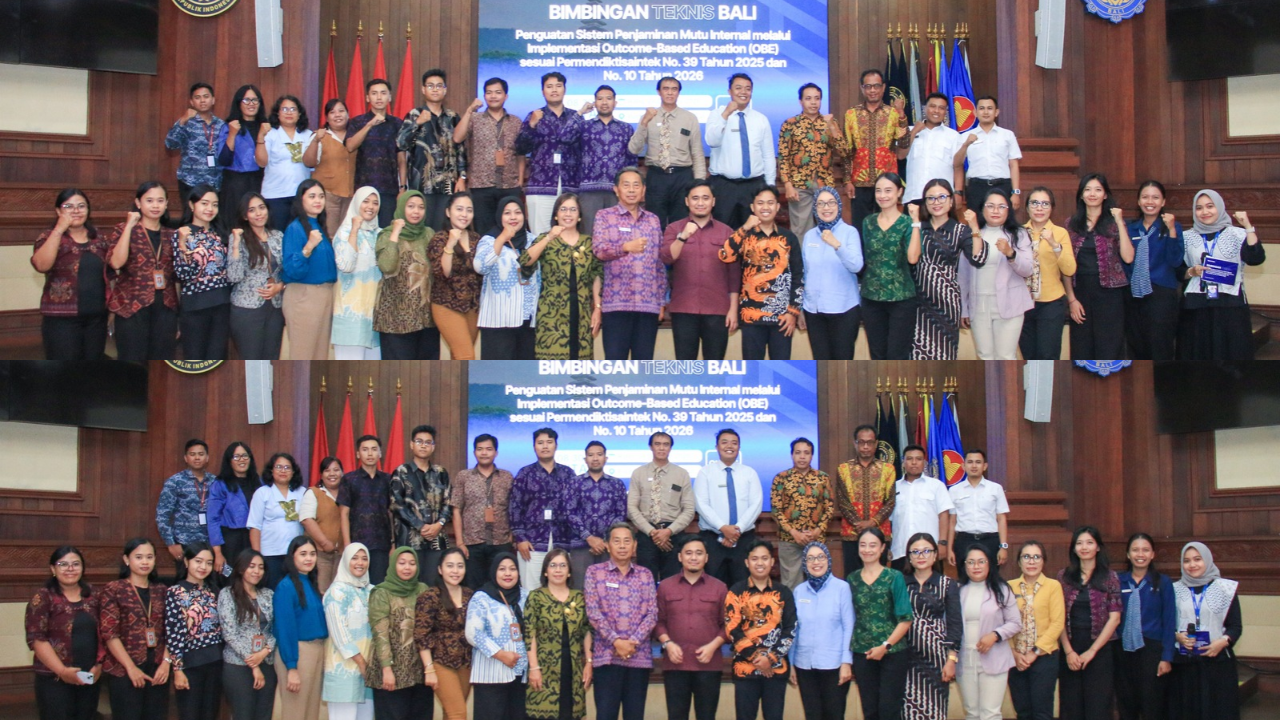
DENPASAR, Bali — Representatives of Sekolah Tinggi Agama Islam (STAI) Denpasar Bali participated in a technical guidance and talk show on strengthening the Internal Quality Assurance System (Sistem Penjaminan Mutu Internal/SPMI) through the implementation of Outcome-Based Education (OBE), held at MICE Widyatula, Bali Tourism Polytechnic, Bali, Indonesia, on Wednesday, October 28, 2026. The event addressed the importance of aligning institutional quality assurance practices with national higher education standards, developing learning outcomes-oriented curricula, and understanding the applicable regulatory framework.
Representing STAI Denpasar Bali were Kurniawati, M.M., Head of the institution’s Quality Assurance Unit, and Pasai Syahri Dewa, S.Pd., Higher Education Information Technology and Data Operator (TIPD Operator Perguruan Tinggi). Their participation reflected the relevance of professional development and cross-functional collaboration in strengthening quality assurance practices, particularly through coordination between quality management and institutional information systems.
Strengthening a Culture of Continuous Quality Improvement
The Internal Quality Assurance System plays an important role in helping higher education institutions maintain academic standards and pursue continuous improvement. Through SPMI, institutions establish quality standards, implement policies, evaluate performance, control deviations, and identify opportunities for improvement.
These processes are commonly organized around the PPEPP cycle: Penetapan, Pelaksanaan, Evaluasi, Pengendalian, and Peningkatan—establishing, implementing, evaluating, controlling, and improving quality standards.
Effective quality assurance involves more than preparing policies and administrative documents. It requires consistent implementation, reliable evidence, periodic evaluation, institutional accountability, and appropriate follow-up. Quality assurance therefore needs to become an integral part of academic governance and daily institutional operations.
For higher education institutions, this approach provides a framework for examining whether academic processes operate according to established standards and whether evaluation results lead to meaningful improvements in educational delivery.
Connecting Curriculum Design with Learning Outcomes
Outcome-Based Education is an approach to curriculum development that emphasizes what students are expected to know, understand, and demonstrate upon completing their studies. Its implementation requires alignment between graduate learning outcomes (Capaian Pembelajaran Lulusan/CPL), course learning outcomes (Capaian Pembelajaran Mata Kuliah/CPMK), learning activities, teaching strategies, and assessment methods.
When these components are coherently designed, institutions can evaluate student achievement against clearly defined educational objectives. Assessment results can also provide evidence for reviewing curriculum relevance, improving teaching practices, and identifying areas where students may require additional academic support.
Integrating OBE into institutional quality assurance can strengthen the connection between curriculum planning, classroom implementation, and academic evaluation. However, its effectiveness depends on consistent application, appropriate assessment instruments, and the systematic use of evaluation findings to support improvement.
Understanding the Higher Education Regulatory Framework
The technical guidance and talk show addressed a regulatory context shaped by Minister of Higher Education, Science, and Technology Regulation No. 39 of 2025 concerning Higher Education Quality Assurance and its amendment through Regulation No. 10 of 2026.
Regulation No. 39 of 2025 establishes a framework covering national higher education standards, institution-established standards, quality assurance systems, accreditation bodies, and higher education data management. Regulation No. 10 of 2026 subsequently amended the 2025 regulation, including provisions relating to general definitions, study programs, accreditation, accreditation institutions, and transitional arrangements.
Understanding the relationship between these regulations is important for institutional leaders and quality assurance personnel responsible for reviewing internal procedures and maintaining alignment with applicable national requirements. Regulatory awareness also supports coordination between internal quality assurance, external quality assurance, accreditation processes, and institutional reporting.
For higher education institutions, the practical challenge is to translate regulatory provisions into appropriate institutional standards, documented procedures, measurable performance indicators, and consistent evaluation practices.
Professional Dialogue and Institutional Collaboration
The event brought together professionals associated with higher education leadership, quality assurance, academic management, and related services. Individuals listed among the event’s speakers and hosts included Dr. Drs. Ida Bagus Putu Puja, M.Kes., Director of Bali Tourism Polytechnic; Dr. I Wayan Sukma Winarya Prabawa, M.Par., M.Pro., Deputy Director II of Bali Tourism Polytechnic; and Dr. Lukia Zuraida, S.Pd., M.Hum., Head of its Quality Assurance Center.
Other professionals associated with the event included Dr. Dandi Darmadi, M.A.P., Head of the Quality Assurance Institution at Universitas Andi Djemma Palopo and Learning and Development Manager at SEVIMA; Desak Gede Yenny Apriani, S.Kep., M.Kes., Deputy Chairperson I of STIKES Advaita Medika Tabanan; and Rayhan Haeqal Rahman, Customer Experience Specialist at SEVIMA.
Bringing together professionals from different institutional and professional backgrounds creates opportunities to exchange perspectives on quality standards, implementation challenges, academic governance, and approaches to continuous improvement. Such dialogue can broaden institutional understanding while recognizing that quality assurance practices must respond to the circumstances and needs of individual institutions.
Supporting Quality Assurance at STAI Denpasar Bali
For STAI Denpasar Bali, participation in professional development activities of this kind provides an opportunity to strengthen knowledge of higher education quality assurance and reflect on the relationship between academic processes, institutional governance, and information management.
Quality assurance functions and information technology support systems have complementary roles in this process. Quality assurance personnel contribute to the development, monitoring, and evaluation of institutional standards, while reliable academic data and documentation can provide evidence for performance monitoring, institutional reporting, and improvement planning.
Effective coordination among institutional leadership, quality assurance personnel, academic units, lecturers, educational staff, and information system operators is therefore important to maintaining consistent and evidence-based quality management.
The event underscored the broader relevance of continuous professional learning, regulatory awareness, and collaboration in higher education. By connecting quality assurance principles with outcome-oriented curriculum development and reliable institutional evidence, higher education institutions can strengthen their capacity to evaluate performance and identify opportunities for improvement.
For STAI Denpasar Bali, these areas remain important considerations in supporting an accountable, responsive, and sustainable academic environment in which educational quality and student learning outcomes remain central priorities.