
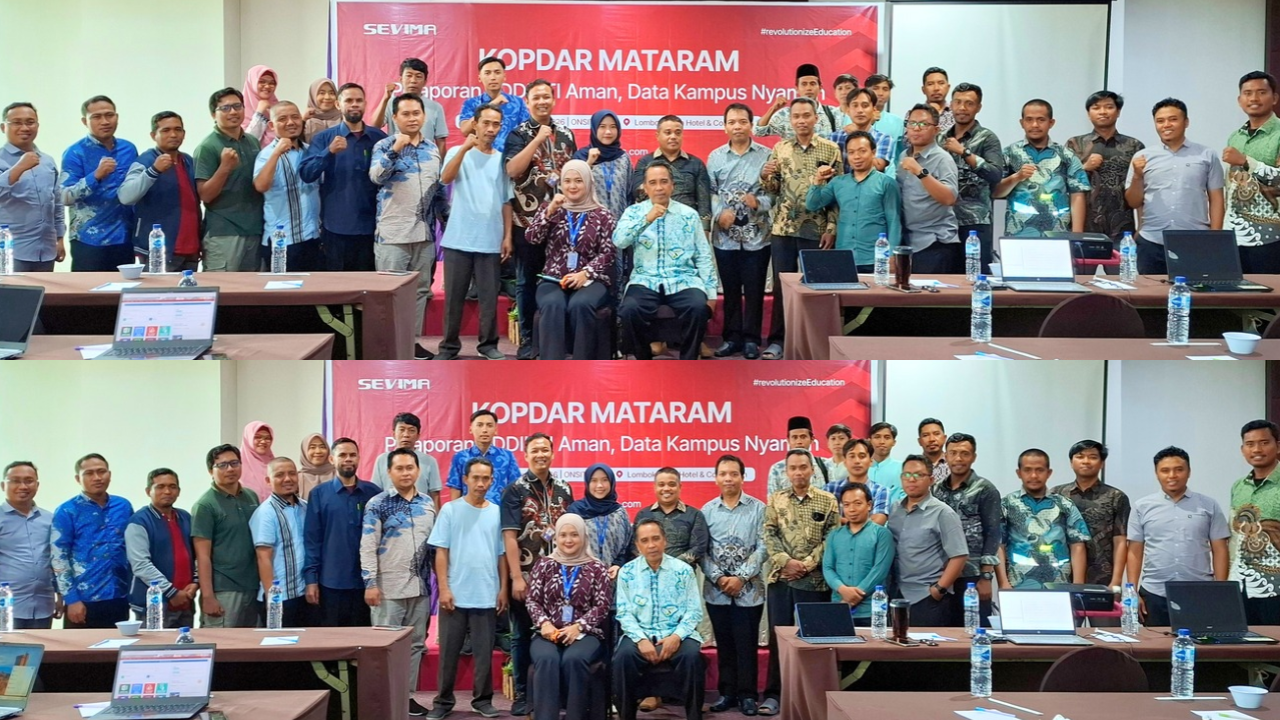
MATARAM, Indonesia — Higher education operators representing Private Islamic Higher Education Institutions (PTKIS) across Bali, West Nusa Tenggara (NTB), and East Nusa Tenggara (NTT) gathered for KOPDAR MATARAM OPERATOR on Thursday, October 22, 2026, at Lombok Plaza Hotel & Convention in Mataram, West Nusa Tenggara. The gathering focused on strengthening institutional data management, improving understanding of national academic information systems, and encouraging professional collaboration under the theme “PDDIKTI Aman dan Data Kampus Nyaman,” or “Secure PDDikti, Reliable Campus Data.”
The gathering provided an opportunity for university operators to exchange knowledge and discuss the administrative responsibilities involved in maintaining accurate, consistent, and timely higher education data. As digital reporting systems become increasingly important to institutional operations, the accuracy of academic records and coordination among campus administrative units remain essential to responsible higher education management.
The discussions featured Moammar Qadafi, Chair of the KOPERTAIS Region XIV Operators Forum, and “King” Ramli, S.A.P., a senior operator at Universitas Muhammadiyah Mataram (UMMAT). Their professional experience provided context for discussions concerning academic information systems, data reporting, and the practical responsibilities of university operators.
One of the principal topics was the National Diploma and Professional Certificate Numbering System (PISN). Administered through Indonesia’s Ministry of Higher Education, Science, and Technology (Kemdiktisaintek), the platform supports the generation and verification of national diploma and professional certificate numbers and is integrated with the Higher Education Database, known as PDDikti.
The discussion highlighted the importance of maintaining complete student records, reporting academic information accurately, and meeting applicable requirements when processing national diploma numbers. Reliable institutional data is essential because student records must satisfy relevant validation requirements before numbering can be processed.
Another area of discussion was lecturer performance reporting through SISTER (Sistem Informasi Sumberdaya Terintegrasi), the Integrated Human Resources Information System. The platform supports the management of lecturers’ administrative and professional data. Accurate information and appropriate reporting practices are therefore important in supporting institutional administration and the management of academic personnel.
Participants also discussed digital academic services provided by PT Sentra Vidya Utama, including the Growth Lite package used by STAI Denpasar Bali. The discussion placed digital platforms within the wider context of academic administration, information management, and institutional operations. Their practical relevance lies in how higher education institutions manage administrative workflows and maintain reliable academic records, without presuming specific outcomes from the event.
Developments in PDDikti 4.0 formed another part of the discussion. The topic underscored the importance of institutional readiness, consistent data management, timely reporting, and communication between academic administrators and university operators. As institutions respond to developments in higher education information systems, operators continue to play an important role in maintaining the quality of submitted data and supporting administrative accountability.
The gathering also addressed higher education quality assurance regulations, particularly Minister of Higher Education, Science, and Technology Regulation No. 39 of 2025 concerning Higher Education Quality Assurance and Regulation No. 10 of 2026, which amends the earlier regulation. The regulatory framework provides important context for institutional quality assurance, accreditation, and higher education administration. Awareness of applicable provisions helps institutions understand the regulatory environment in which their academic information and administrative processes operate.
STAI Denpasar Bali participated through Pasai Syahri Dewa, who attended the gathering as a university operator. His participation formed part of the institution’s professional engagement and knowledge-sharing concerning higher education data management and digital academic administration. The topics discussed offer relevant perspectives for institutional operations, particularly in relation to data accuracy, national reporting requirements, and the use of digital academic services. However, any implementation of specific practices at STAI Denpasar Bali remains a matter for the institution’s own evaluation and administrative processes.
KOPDAR MATARAM OPERATOR highlighted the continuing importance of collaboration among higher education operators across Bali, NTB, and NTT. Through professional dialogue and the exchange of practical knowledge, operators can strengthen their understanding of academic information systems, regulatory developments, and institutional reporting responsibilities. Sustained attention to data accuracy, regulatory awareness, and responsible digital system management remains essential to building more reliable and accountable higher education administration.