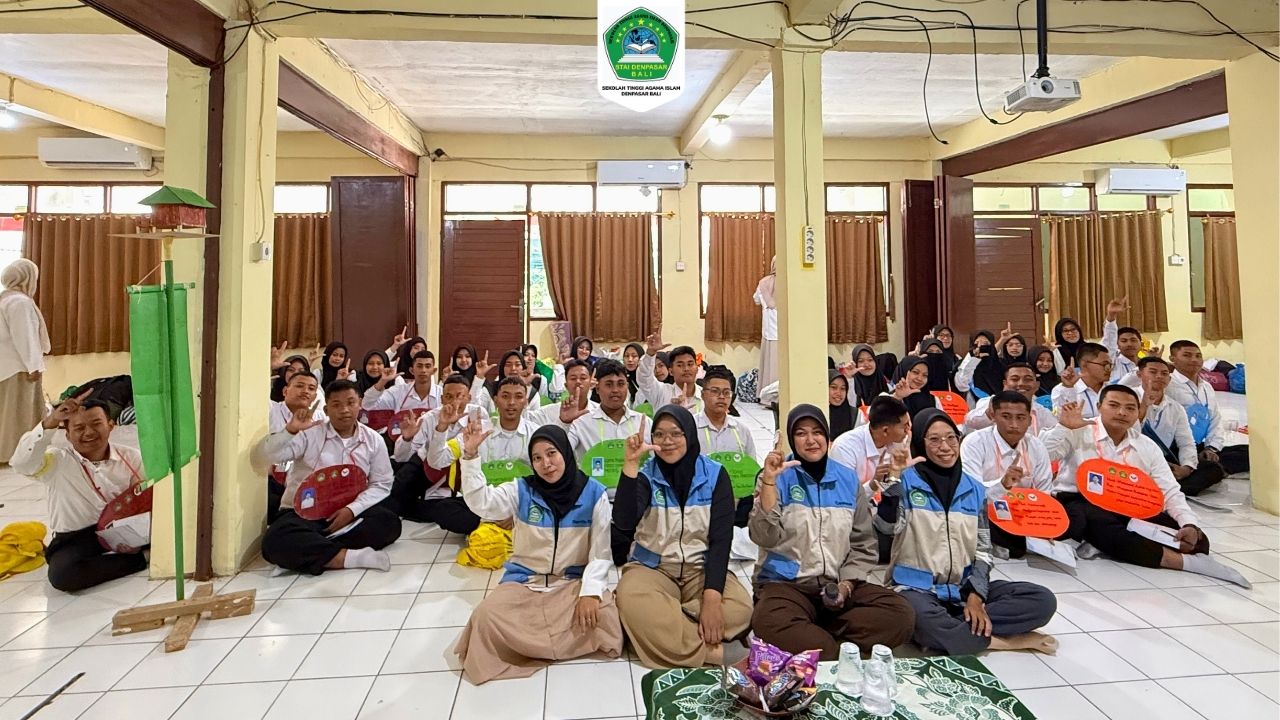
STAI Denpasar Bali – 2026 New Student Academic and Cultural Orientation Program (Pengenalan Budaya Akademik/PBAK), STAI Denpasar Bali introduced new students to the role and importance of the Student Senate, known as Senat Mahasiswa (SEMA), within the campus student organization landscape; the session was led by Durrotun Nasihah, Itsna Amilatul Hasanah, Vina Naila Rohmatika, and Risa Khusnul Khotimah.
The session provided an initial understanding of student representation and the importance of constructive participation in organizational life. New students were introduced to the broader concepts of organizational governance, representation, advocacy, oversight, accountability, leadership, and the responsible communication of student aspirations.
The orientation highlighted that student life in higher education extends beyond classroom learning. In addition to developing academic knowledge and professional competence, students may also participate in organizational activities that contribute to the development of communication skills, critical thinking, leadership capacity, teamwork, and social responsibility.
Within this context, the Student Senate was introduced as an important element of student representation. In general terms, student representative or legislative-oriented institutions may play a role in representing student aspirations, contributing to organizational governance, discussing organizational provisions, and carrying out constructive oversight in accordance with applicable institutional regulations and student organizational procedures.
The discussion helped new students understand that representation requires responsibility. Students who participate in organizational processes are expected not only to communicate their own perspectives but also to develop the ability to listen to others, understand different concerns, and contribute to constructive dialogue.
The session also provided an overview of legislative-oriented functions that may be associated with student representative institutions. Depending on applicable organizational regulations and procedures, these functions may include contributing to the discussion, formulation, review, or development of organizational guidelines and provisions.
Such discussions may relate to organizational governance, internal regulations, general guidelines, representative procedures, or other matters connected with the implementation of student organizational activities. The orientation emphasized that organizational governance requires a clear understanding of responsibilities, procedures, communication, and accountability.
Constructive oversight was another important theme introduced during the session. Participants gained an initial understanding that oversight within an organization should not be viewed solely as criticism or fault-finding. Instead, it can serve as an educational process that supports transparency, accountability, evaluation, and organizational improvement.
Through responsible oversight, student organizations may reflect on their programs, activities, and organizational processes while maintaining communication and cooperation among the parties involved. This approach encourages a healthy organizational environment in which accountability is balanced with mutual respect and a shared commitment to improvement.
The discussion also addressed the importance of responsible organizational management, including transparency in planning and accountability processes where applicable. Student representative institutions may, in accordance with established procedures, participate in reviewing organizational plans, proposals, or accountability reports.
The orientation emphasized that financial and organizational responsibilities should be approached with integrity, transparency, and awareness of applicable procedures. At the same time, students were introduced to the importance of distinguishing student organizational responsibilities from broader institutional financial and administrative authority.
Another significant aspect of the session was the role of advocacy and the communication of student aspirations. New students were encouraged to understand the importance of conveying concerns, suggestions, and ideas through constructive, ethical, and responsible channels.
Student representation can provide opportunities for communication and dialogue between students and relevant stakeholders when issues require clarification, consultation, or appropriate follow-up. Concerns related to academic experiences, student activities, organizational matters, campus facilities, or other relevant issues may require communication through established and responsible processes.
The session emphasized that advocacy does not necessarily guarantee a particular outcome for every concern or proposal. Rather, responsible advocacy involves communicating issues clearly, presenting relevant information, respecting appropriate procedures, and engaging in constructive dialogue.
Participants were also introduced to the general importance of organizational structure and the division of responsibilities. Student representative institutions may involve leadership roles, administrative functions, financial responsibilities, committees, commissions, or other divisions depending on the official organizational structure and applicable regulations.
Regardless of the specific structure, effective organizations require clear coordination, communication, documentation, and accountability. The orientation highlighted the importance of understanding one’s role and responsibility within an organization while maintaining cooperation with other members and organizational units.
The discussion further helped students distinguish, in general terms, between the different functions that may exist within the student organizational ecosystem. While SEMA may be associated more closely with representation, organizational governance, regulations, oversight, and advocacy, the Student Executive Board, or DEMA, may be more directly associated with the implementation of student programs and activities.
The distinction was presented as a general framework for understanding complementary organizational responsibilities. Both representative and executive institutions can contribute to a healthy student environment through communication, coordination, accountability, and cooperation.
Rather than viewing different student organizations as competing entities, the orientation encouraged new students to understand the importance of collaboration. A constructive organizational environment depends on the ability of different student bodies and individuals to communicate effectively, respect their respective responsibilities, and work toward the broader development of students and campus life.
Ethical communication also received important attention during the introduction. Students were encouraged to communicate aspirations, concerns, and ideas in a respectful and responsible manner. Constructive dialogue requires accuracy, appropriate language, willingness to listen, and consideration for the perspectives of others.
The orientation emphasized that responsible participation involves more than simply expressing opinions. Students are also expected to understand relevant information, consider institutional procedures, and communicate in ways that contribute to problem-solving and mutual understanding.
The Student Senate was further introduced as a potential environment for leadership development and organizational learning. Participation in student organizations can provide opportunities for students to develop competencies that complement their academic experience.
These competencies may include public speaking, critical and analytical thinking, negotiation, communication, problem-solving, organizational management, teamwork, policy awareness, and responsible decision-making. Such experiences can help students understand how collective decisions are discussed, how responsibilities are managed, and how communication contributes to organizational effectiveness.
Leadership development was therefore presented as a gradual process. Students may begin by participating in discussions, student activities, committees, organizational initiatives, or other constructive opportunities available in accordance with applicable procedures and regulations.
Through experience, students can develop greater confidence while also learning the importance of discipline, accountability, cooperation, and ethical leadership. Organizational involvement, however, should remain balanced with academic responsibility and personal development.
The session also highlighted the importance of student participation in creating a constructive academic environment. Students are not only recipients of educational services and participants in classroom activities; they may also contribute ideas, innovation, dialogue, and responsible engagement to the wider campus community.
Active participation can strengthen students’ sense of responsibility and belonging while encouraging them to become more aware of the challenges and opportunities within their academic environment. At the same time, participation must be accompanied by respect for institutional procedures, ethical standards, and the rights and perspectives of others.
New students were also given an initial understanding of possible opportunities to become involved in student organizations during their academic journey. Depending on applicable institutional regulations and organizational procedures, students may have opportunities to participate in organizational activities, representative processes, leadership development, recruitment, or other forms of student engagement.
The orientation encouraged students to prepare themselves for future participation by developing academic responsibility, communication skills, organizational awareness, ethical conduct, and the ability to work collaboratively.
The introduction to SEMA also reflected the broader educational mission of STAI Denpasar Bali in supporting the holistic development of students. Higher education is not limited to the acquisition of knowledge in the classroom. It also provides opportunities for students to develop leadership capacity, communication skills, critical thinking, organizational competence, ethical awareness, and social responsibility.
Student organizations can therefore serve as complementary spaces for learning and development. Through responsible participation, students may gain practical experiences that strengthen their ability to communicate, collaborate, manage responsibilities, and respond constructively to challenges.
A healthy organizational environment requires dialogue, mutual respect, transparency, accountability, cooperation, ethical leadership, and a commitment to constructive problem-solving. These values are important not only within student organizations but also in preparing students to participate responsibly in wider social and professional environments.
Through the 2026 PBAK program, the introduction to the Student Senate provided new students with an important foundation for understanding student representation and organizational participation at STAI Denpasar Bali.
The session emphasized that participation in campus life should be accompanied by responsibility, ethical conduct, respect for institutional procedures, and a willingness to contribute constructively. New students were encouraged to develop their leadership, communication, critical thinking, and collaboration skills while maintaining their commitment to academic responsibilities.
As students begin their academic journey, the introduction to SEMA serves as an important reminder that higher education also offers opportunities to learn through participation, dialogue, cooperation, and organizational experience. By engaging responsibly and constructively, students can contribute to a healthy academic environment while continuing to develop the knowledge, character, and leadership capacity needed throughout their educational journey and beyond.
STAI Denpasar Bali Introduces New Students to Student Representation Through SEMA