
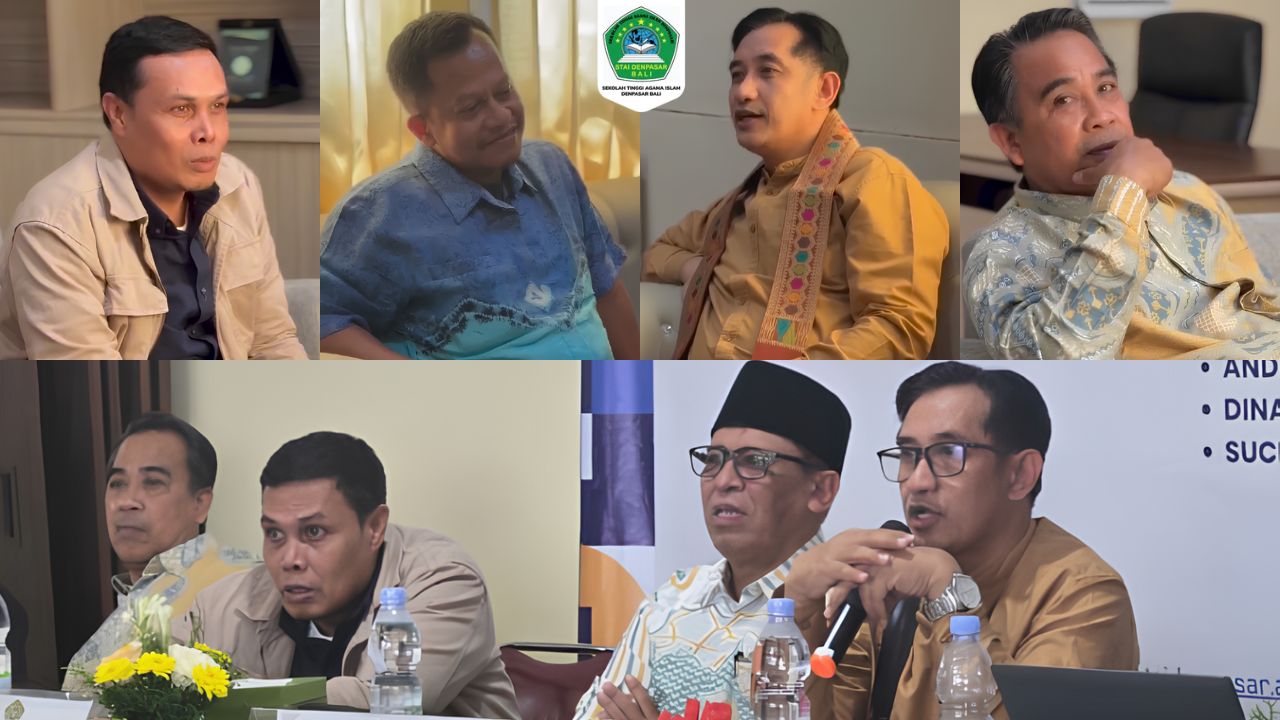
DENPASAR, BALI — Sekolah Tinggi Agama Islam (STAI) Denpasar Bali held a field assessment on Saturday, September 19, 2026, as part of its ongoing efforts to transform into Institut Agama Islam (IAI) Al-Ma’ruf Modern Denpasar. The initiative represents a strategic step in the institution’s pursuit of stronger institutional capacity, improved academic quality, and a more advanced and community-oriented model of Islamic higher education in Bali.
Carrying the theme “STAI DENPASAR BALI → IAI AL-MA’RUF MODERN: From Bali for Better Islamic Education,” the event brought together representatives of the Directorate General of Islamic Education at the Ministry of Religious Affairs of the Republic of Indonesia, Kopertais Region XIV, the Al-Ma’ruf Modern Utama Foundation, institutional leadership, and members of the STAI Denpasar Bali academic community.
The field assessment forms part of the institution’s continuing transformation process. Through this initiative, STAI Denpasar Bali seeks to strengthen its organizational foundations and institutional readiness while advancing its broader vision of contributing to the development of quality Islamic higher education in Bali.
Strengthening Institutional Readiness Through Collaboration
The involvement of representatives from the Ministry of Religious Affairs underscores the importance of institutional coordination in the development of Islamic higher education. Among those included in the event were Prof. Dr. Phil. Sahiron, MA., Director General of Islamic Education at the Ministry of Religious Affairs of the Republic of Indonesia; Dr. Ahmad Mahfud Arsyad, M.Ag., Head of the Subdirectorate of Institutional Affairs; and Dinata Firmansyah, S.Si., M.Kesos., an official of the Subdirectorate of Cooperation.
Representatives of Kopertais Region XIV, which covers Bali, West Nusa Tenggara (NTB), and East Nusa Tenggara (NTT), were also involved. They included Prof. Dr. H. Masnun, M.Ag., Coordinator of Kopertais Region XIV; Prof. Dr. H. Ali Jadid Al Idrus, M.Pd., Deputy Coordinator; and Prof. Dr. H. Muhammad Sa’i, M.A., Secretary.
The participation of these stakeholders reflects the collaborative context in which institutional development takes place. Coordination among higher education authorities, regional coordinating bodies, and institutional leaders is important to supporting governance, strengthening academic standards, and advancing the sustainable development of Islamic higher education.
The field assessment should therefore be understood within the broader context of STAI Denpasar Bali’s ongoing efforts to pursue institutional transformation. Its proposed transition to IAI Al-Ma’ruf Modern Denpasar remains a process in progress and should not be interpreted as confirmation that the transformation has received final approval.
A Shared Commitment from Foundation Leadership to the Academic Community
Institutional development also requires commitment from the organization’s internal stakeholders. The event involved Dr. H. Arjiman, M.Pd., Chairperson of STAI Denpasar Bali; Drs. H. Mahrusun, M.Pd., Chairperson of the STAI Denpasar Bali Senate and Chairperson of the Bali Provincial Indonesian Council of Ulama (MUI); Dr. Jumari, M.Pd., Director of Education of the Al-Ma’ruf Modern Utama Foundation; and Badi’atussholehah, M.M., Chairperson of the foundation.
Drs. H. Khoeron, M.Ag., Chairperson of the Denpasar City Indonesian Council of Ulama (MUI), was also among the institutional stakeholders identified in connection with the event.
The participation of foundation leadership and institutional representatives highlights the relationship between organizational commitment and the pursuit of academic development. A sustainable transformation requires alignment between institutional leadership, foundation governance, academic administration, and the educational mission of the institution.
The wider STAI Denpasar Bali community also formed part of this shared institutional context. Heads and secretaries of study programs, heads of institutional offices and administrative units, lecturers, educational staff, and students represent the broader community whose commitment will remain important to the institution’s continuing development.
Moving toward a new institutional form involves more than a change in name or organizational status. It also provides an opportunity to strengthen institutional capacity, improve professional management, support academic quality, and build a stronger foundation for responding to the changing needs of higher education.
Advancing Islamic Higher Education in Bali
For STAI Denpasar Bali, the proposed transformation into IAI Al-Ma’ruf Modern Denpasar reflects an aspiration to establish a more advanced, modern, competitive, and community-oriented Islamic higher education institution.
The initiative also forms part of a wider commitment to strengthening the contribution of Islamic higher education to educational and social development in Bali. By continuing to focus on institutional quality, academic development, and collaboration with relevant stakeholders, the institution seeks to build a stronger foundation for serving students and the surrounding community.
The theme, “From Bali for Better Islamic Education,” expresses this aspiration. It connects the institution’s local context with a broader commitment to improving educational quality and supporting the continued development of Islamic higher education.
As the transformation process continues, collaboration among the Ministry of Religious Affairs, Kopertais Region XIV, foundation leadership, institutional management, and the academic community remains an important part of the institution’s development agenda.
The September 19, 2026, field assessment marks an important stage in that continuing journey. STAI Denpasar Bali remains committed to pursuing institutional improvement, strengthening academic quality, and contributing positively to the community through Islamic higher education. While the proposed transformation continues through its relevant processes, the institution’s central aspiration remains clear: From Bali for Better Islamic Education.